
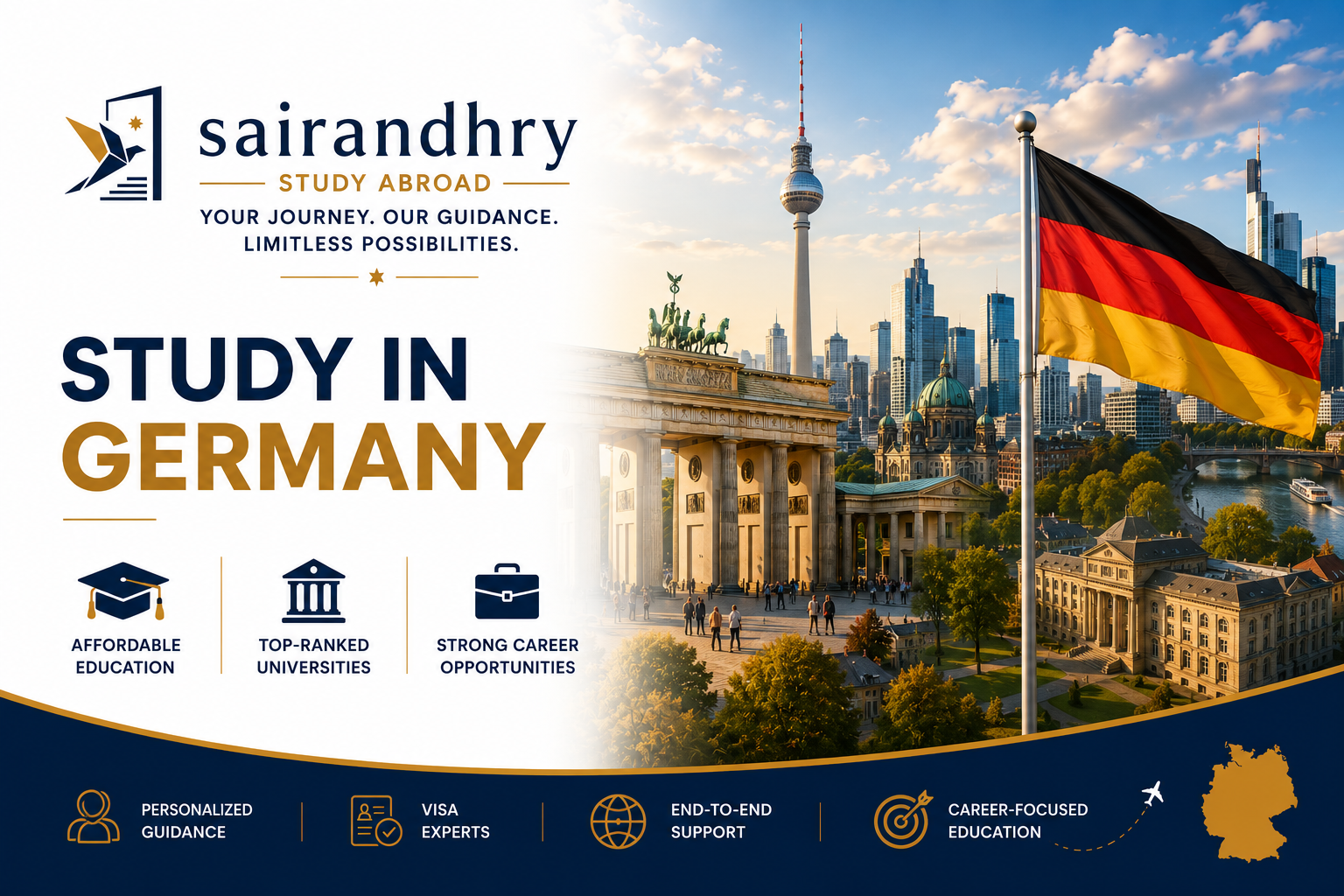
Study in Germany
Germany has become one of Europe’s most attractive study destinations for international students. Known for its world-class universities, affordable education, strong economy, and excellent career prospects, Germany offers students a unique opportunity to gain globally respected qualifications while experiencing life in the heart of Europe.
Choose the Right Intake for Your Academic Journey
Available Intakes in Germany
Winter (October)
The primary intake with the largest number of courses and university options.
Summer (April)
A secondary intake available for selected programs and institutions.
Early Application Cycle
Many universities open applications several months before the intake begins.
Flexible Program Deadlines
Application deadlines vary depending on the university and course.

Why Choose Germany?
Germany combines academic excellence, innovation, and industry-focused education, making it an ideal destination for ambitious students.
Key Benefits
- Affordable tuition fees
- Globally recognized degrees
- Strong economy and job market
- High-quality education system
- Research and innovation opportunities
- Gateway to Europe
Top Universities in Germany
Germany is home to some of the world’s leading public and research universities.
Leading Universities
- Technical University of Munich (TUM)
- Ludwig Maximilian University of Munich (LMU)
- Heidelberg University
- RWTH Aachen University
- Freie Universität Berlin
- Humboldt University of Berlin
- Karlsruhe Institute of Technology (KIT)
- University of Freiburg
Popular Courses in Germany
German universities offer a wide range of programs aligned with global industry demands.
Popular Fields of Study
- Business & Management
- Information Technology
- Artificial Intelligence & Data Science
- Automotive Engineering
- Renewable Energy
- Nursing,Healthcare & Life Sciences
- Architecture
Tuition Fees & Living Costs
Germany is known for offering high-quality education at a relatively affordable cost.
Estimated Annual Expenses
- Tuition Fees: Low or no tuition fees at many public universities
- Semester Contributions: EUR 150 – 400
- Living Expenses: EUR 11,000 – 13,000 per year
- Accommodation: Varies by city and lifestyle
German Student Visa Guidance
International students generally require a German student visa before commencing their studies.
Common Requirements
- University Admission Letter
- Proof of Funds
- Valid Passport
- Medical Examination (if applicable)
- German Language Proficiency
- Supporting Visa Documentation
- Health Insurance
Sairandhry provides complete assistance with visa documentation and application preparation.
Work Opportunities for International Students
Germany provides valuable opportunities for students to gain practical work experience while studying.
Benefits include:
- Part-time work during studies
- Internship opportunities
- Strong demand for skilled graduates
- Career opportunities in engineering, technology, healthcare, and business sectors
How Sairandhry Can Help?
Our experienced team provides end-to-end support throughout your study abroad journey.
Our Services
- Career Counselling
- Course Selection
- University Applications
- Student Visa Assistance
- Scholarship Guidance
- Accommodation Support
- Pre-Departure Briefing
- Personalized Guidance
- Bank Loan Assistance
Start Your Germany Journey Today
Our experienced team is here to help you choose the right university, program, and pathway for your future.
Ready to study in Germany?
Book Your Free Consultation Today

Frequently Asked Questions.
Germany is one of the world’s leading study destinations, offering globally recognized universities, affordable tuition fees, excellent research opportunities, and strong career prospects. International students also benefit from post-study work opportunities and a high quality of life.
Yes. Many public universities in Germany charge little or no tuition fees for international students. Students are generally required to pay a semester contribution, while living expenses and health insurance must still be covered.
Admission requirements vary by university and programme but generally include academic transcripts, English or German language proficiency, a Statement of Purpose (SOP), Letters of Recommendation (LOR), a valid passport, and other supporting documents.
The Germany Opportunity Card (Chancenkarte) allows eligible skilled professionals to enter Germany and search for employment without having a job offer in advance. It is a points-based system designed to attract qualified international talent. Know more…
Yes. International students are allowed to work part-time while studying in Germany, helping them gain valuable work experience and support their living expenses.
Yes. After completing your studies, graduates can apply for a post-study residence permit to search for employment related to their qualifications. Once employed, they may become eligible for long-term residence and other immigration pathways.
Not always. Many German universities accept IELTS, TOEFL, PTE, or other English language qualifications. Some institutions may also waive English language requirements if previous education was completed in English.
The average monthly living cost ranges between €900 and €1,200, depending on the city and lifestyle. Expenses usually include accommodation, food, transport, health insurance, and personal costs.
Germany is well known for Engineering, Computer Science, Artificial Intelligence, Data Science, Business Management, Automotive Engineering, Renewable Energy, Medicine, Architecture, and Information Technology programmes.
Sairandhry Study Abroad provides complete guidance throughout your Germany education journey, including university selection, admission assistance, SOP and LOR preparation, Germany Opportunity Card guidance, student visa support, accommodation assistance, education loan guidance, scholarship support, and pre-departure counselling.